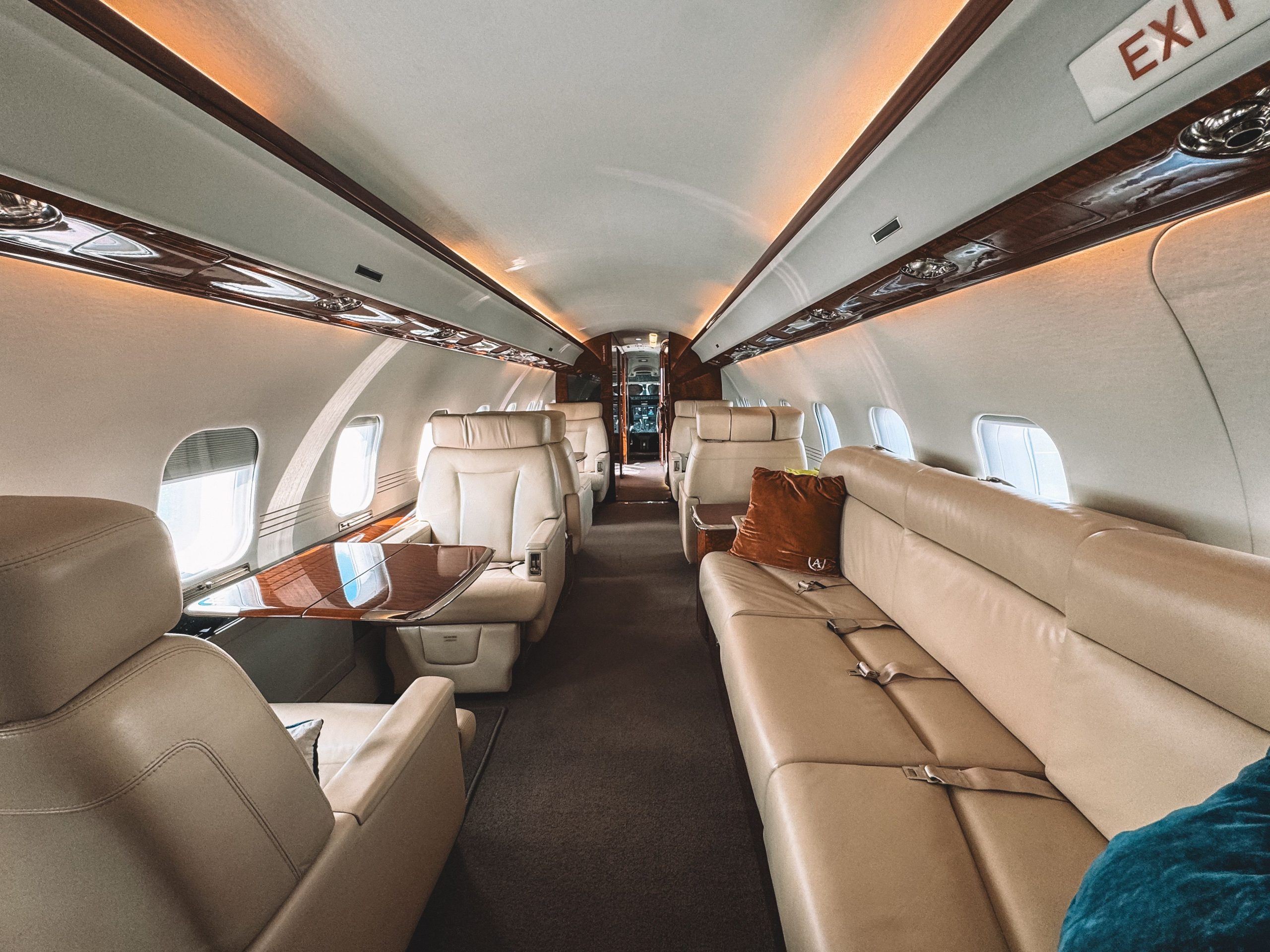
Private aviation is usually described through its most visible users. In media coverage, the people walking onto a business jet are celebrities, chief executives, and sometimes well-compensated professionals whose calendars are built around depositions and court dates. “Flying like a class-action lawyer” has become shorthand for that image.
Set the image aside for a moment. Flying private is a service with a documented cost structure, and the variable that decides whether it is affordable is annual flight hours, not the passenger’s job title. A plaintiffs’ firm, a corporate board, and a family office all face the same arithmetic: how many hours a year will the aircraft actually fly, and who pays for the hours it does not? The FAA counted roughly 5.3 million business jet operations – each landing or takeoff – in 2025, a 3.5 percent increase over 2024, in its Business Jet Report published in January 2026. This is a large, structured market, not a private club.

The four ways to fly private – and what each one commits you to
Almost every private flight is bought through one of four structures. They differ less in the aircraft than in how the fixed costs are distributed. On-demand charter charges by the trip and carries no standing obligation. A jet card pre-purchases hours and a rate. A fractional share buys a slice of an aircraft plus a monthly management fee. Full ownership puts the entire capital and operating burden on one owner.
| Access model | Upfront commitment | Recurring fixed cost | Typical hourly cost | Where it usually fits |
|---|---|---|---|---|
| On-demand charter | None | None | Roughly $5,000–$18,500, depending on aircraft class | Under about 100 flight hours a year |
| Jet card | Deposit or prepaid hour block | Often none beyond the card purchase | From roughly $3,500 upward, depending on aircraft | Roughly 25–100 hours a year |
| Fractional share | Share purchase, often $400,000–$1M+ | Monthly management fee, often $8,000–$14,000 | Roughly $3,500–$6,500 direct operating, plus allocated fixed cost | Roughly 50–200 hours a year |
| Full ownership | Aircraft purchase, roughly $3M–$80M | Roughly $500,000–$3M+ a year | Roughly $1,800–$9,500 variable, by class | Roughly above 200–400 hours a year |
Indicative 2026 ranges compiled from published industry estimates and program pricing (Flyius, AviNews, Trillionaire Daily, Jettly, Uncompromised Travel), current as of mid-2026. Treat them as planning ranges, not quotes; actual figures turn on aircraft, route, date, operator, and home base. Federal excise tax adds 7.5 percent plus $5.30 per domestic passenger segment.
What an hour in the air actually costs
The hourly rate a broker quotes is rarely the whole bill. For an owner-operated aircraft, fuel alone typically accounts for one-quarter to one-third of direct operating cost, and burn ranges from roughly 200 litres per hour on a very light jet to well over 1,000 on a heavy jet. Engine maintenance programs, which convert unpredictable overhaul bills into a predictable per-hour charge, add a few hundred dollars per hour on very light aircraft and more than $1,500 per hour on large-cabin models.
Then come the costs that arrive whether or not the aircraft moves. Two qualified pilots for a midsize jet commonly run $200,000–$350,000 a year in salary, and flagship crews can exceed $500,000. Hangar rent runs $50,000–$200,000 a year depending on metro area and aircraft size. Hull and liability insurance is typically $20,000–$60,000 for a light jet and can pass $150,000 for a high-value aircraft with global operations. A management company handling crew, scheduling, and regulatory compliance charges roughly $60,000–$150,000 a year. Industry analysts often note that once fixed costs are included, the honest cost of flying your own aircraft can land at two to four times the headline hourly number.
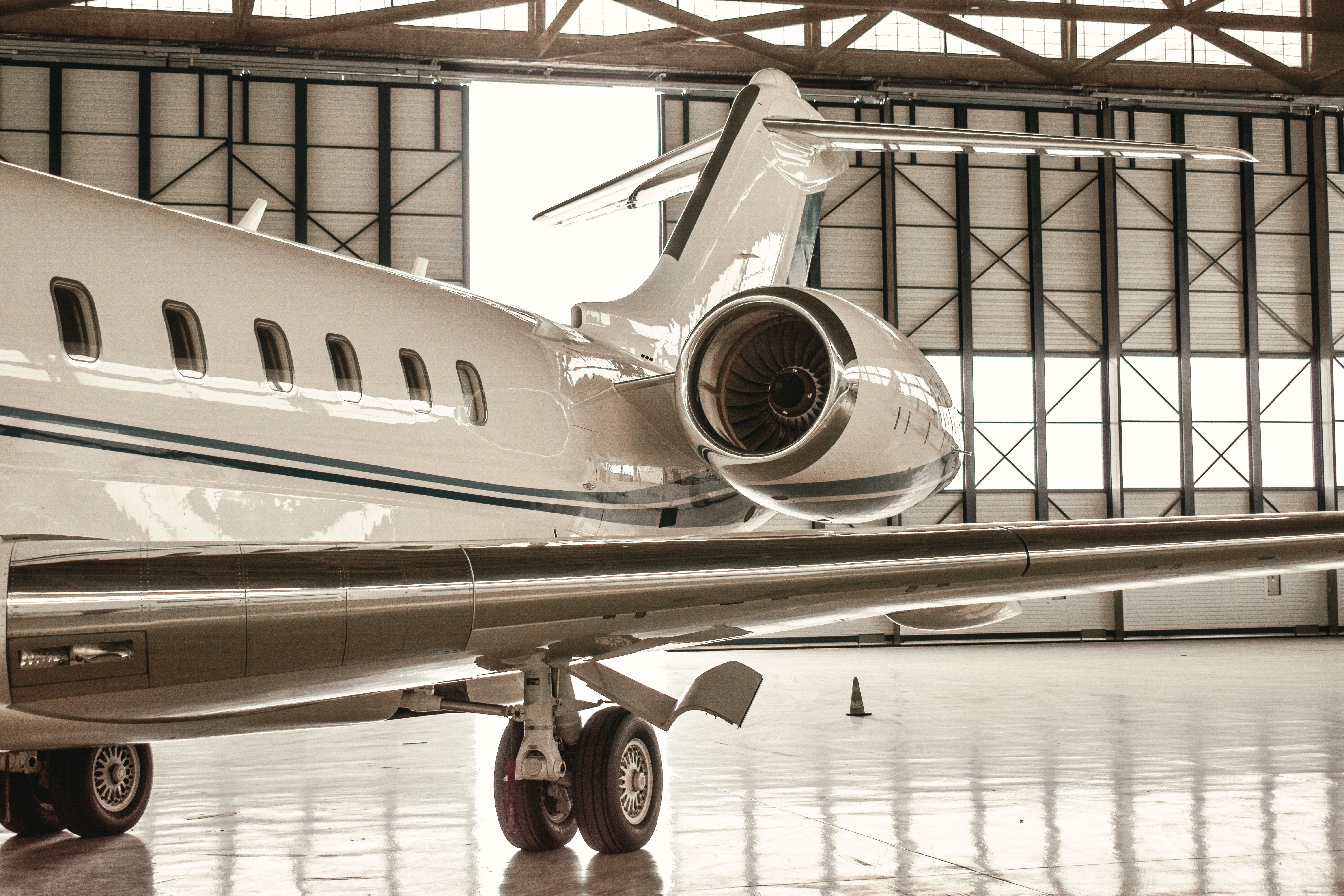
The threshold that decides between owning and chartering
Because fixed costs accrue regardless of use, ownership only becomes competitive at high utilisation. Reported break-even ranges cluster somewhere near 200 to 300 occupied flight hours a year – roughly two to three round trips a week, every week. Some analyses put the crossover higher, at 350 to 450 hours for sustained use, while others place it nearer 200. The disagreement is genuine and depends on aircraft class, route pattern, financing, and how residual value is treated.
Below the threshold, fixed costs spread across too few hours and charter or a card usually costs less. Above it, ownership’s lower per-hour cost can overcome its fixed base. It is worth noting that many owners do not fly that much and accept the premium anyway. Industry analysis suggests roughly half of whole-aircraft owners fly fewer than 300 hours a year and treat schedule control, cabin consistency, and privacy as benefits that a pure cost comparison does not capture. That is a legitimate position – it is simply a different question from the arithmetic.
The government’s slice: excise taxes and segment fees
Private flights carry federal transportation taxes, and they apply by route rather than by passenger income. Under the Internal Revenue Code, domestic taxable transportation of persons is subject to a 7.5 percent percentage tax plus a per-segment fee. For 2026 the IRS set the domestic segment fee at $5.30 per passenger, and the international facilities tax at $23.40 per passenger, according to the FAA’s 2026 aviation excise tax structure and rates. Those rates are indexed annually; the 7.5 percent percentage tax is not.
The mechanics matter for how bills are issued. When a charterer pays a fixed amount for an aircraft and does not resell seats, the tax generally attaches to that payment. When the charterer sells transportation to others, the charterer collects and remits the tax instead. The regulations at 26 CFR Part 49, Subpart D also provide an exemption for certain amounts an owner pays a management company for management and flight services, and separate rules apply to fractional-ownership programs. The purpose of a trip – business or personal – does not change whether the tax applies.
How class-action lawyers are actually paid
Attorney compensation in class actions works differently from the hourly billing familiar in other practice areas, and the difference is procedural rather than personal. Class counsel almost always take a case on contingency: they advance litigation costs and are paid only if the class recovers something. The fee is not billed to individual class members. It is paid from the recovery, and only after a court approves it.
Federal Rule of Civil Procedure 23 requires court approval of any class settlement and governs fee awards. Courts generally use one of two methods. Under the percentage-of-the-fund method, counsel receive a share of the recovery; a commonly cited benchmark is 25 percent, though awards vary with complexity and size. Under the lodestar method, the court multiplies reasonable hours by reasonable hourly rates, sometimes applying a multiplier for risk. Courts frequently use one as a cross-check on the other. A chapter on settlement fees and costs from the Litigation Ethics Conference walks through the common-fund framework that shapes those decisions.
Court oversight is the built-in check. A settlement must be found fair, reasonable, and adequate at a fairness hearing, and class members may file objections to the settlement or the fee request. For coupon settlements, the Class Action Fairness Act requires that fees be based on the value of coupons actually redeemed rather than their theoretical face value. Where the money goes when claims go unclaimed – back to the defendant, to remaining claimants, or to a charity under a cy pres award – is also subject to judicial approval.
Periodic legal industry updates in the mainstream press have examined how law firms approach business travel and client service. That coverage is a separate subject from the court-supervised rules that govern attorney compensation, and neither the existence of a fee award nor the way a firm travels is itself evidence of impropriety. The two are simply different questions: one is reputational and journalistic, the other is procedural and governed by Rule 23.
Frequently asked questions
How much does it cost to charter a private jet for one trip?
Charter is priced per trip and scales with aircraft class, distance, date, and availability. Indicative 2026 hourly bands run from roughly $1,800–$2,800 for turboprops to $8,000–$15,000 and above for heavy and ultra-long-range jets. Federal excise tax of 7.5 percent plus $5.30 per domestic segment is added to the flight portion, and daily minimums or peak-day surcharges may apply.
Is it cheaper to own a private jet or charter one?
It depends almost entirely on annual hours. Below roughly 200 flight hours a year, charter or a jet card usually costs less because it avoids the fixed annual costs that ownership carries whether or not the aircraft flies. Above roughly 300–400 hours of sustained use, ownership’s lower per-hour cost can make it cheaper overall. The crossover varies by aircraft class and financing.
What taxes and fees apply to a private jet flight?
Domestic taxable transportation of persons is subject to a 7.5 percent federal percentage tax and a per-segment fee set at $5.30 per passenger for 2026. Flights that begin or end in the United States may also trigger the international facilities tax, set at $23.40 per passenger for 2026. Certain aircraft management services and qualifying fractional-ownership arrangements have specific treatment under the regulations.
How are class-action attorneys paid?
Almost always on contingency. Class counsel advance litigation costs and are paid only if the class recovers money, with the fee taken from the recovery rather than billed to class members. The court must approve the fee, typically under a percentage-of-the-fund method or a lodestar calculation, and may use one as a cross-check against the other.
Does a class member pay attorney fees out of pocket?
Generally no. Individual class members are not billed separately for class counsel’s fees. The approved fee is deducted from the common fund before distributions are calculated, which is why courts scrutinise fee requests and allow class members to object.
Can a court reduce a requested attorney fee?
Yes. Courts have authority to award less than the amount requested if they find it disproportionate to the work performed or the result achieved. Objections from class members, a lodestar cross-check, and comparisons to awards in similar cases are among the factors that can influence the final figure.
How this article was put together
This piece set out to answer two questions: what private aviation actually costs, and how class-action attorney compensation is determined. Cost ranges come from published 2026 industry estimates and program pricing, read in mid-2026 and treated as indicative rather than authoritative. Tax and regulatory details were checked directly against the FAA’s 2026 excise tax schedule and the eCFR text of 26 CFR Part 49. Fee-setting mechanics were drawn from federal procedural rules and legal-education materials on common-fund awards. Where industry sources disagreed on the ownership break-even, that disagreement is stated rather than averaged. Cost figures move with fuel, insurance, and aircraft markets; recheck annually.